

How We Used AI to Run This Year's Create With Conference
A tour of the custom software behind Create With 2026, from AI-generated email campaigns to Raspberry Pi powered screens, and why record app releases are making traction harder than ever.

Hey there!
Welcome back to the newsletter where I take you along on the ride of building profitable software without writing any code using AI. It’s been a few months since the last issue, and I’ve got an excuse: I’ve been flat out organising this year’s Create With Conference in Brighton!
Despite a proper heatwave, we welcomed over 550 AI builders to Brighton - all interested in learning how to build apps and agents without being a traditional developer. I’ve run the conference as a side project with Kieran for the last three years now, and we’ve been blown away by the continued support and how much affection and enthusiasm there is for the event. Thank you to everyone who came along!
Here are some of my favourite photos from the day (and afterparty 🏝️)


Reflecting after this year’s event, two things really struck me.
The first is just how much the advances in AI over the last 12 months helped us actually run the thing. We built a load of custom software for everything from marketing and scheduling right through to the screens hanging in the venue. More on that in a minute.
The second is a bit more sobering. Building software is getting easier, which means record numbers of apps being released, which means it’s harder than ever to get traction. Loads of people at the conference had experienced exactly this. Now that it’s easier than ever to build stuff, how do you capture people’s attention? Tomasz’s talk dived into this in detail. The line that stuck with me: “AI never says: you don’t need that yet.” It will happily build whatever you ask for, which is exactly how you over-engineer your way out of ever launching.
So this issue is a two-parter: the interesting ways we used AI to run the conference, and then what the data says about where app development is heading.
How AI ran the conference (almost)
Quick disclaimer before we start… me and Kieran are not professional event organisers. The only reason a two-person side project can put on an event for over 550 people is that we automated nearly everything around it.
Here’s are some my favourite things we did.
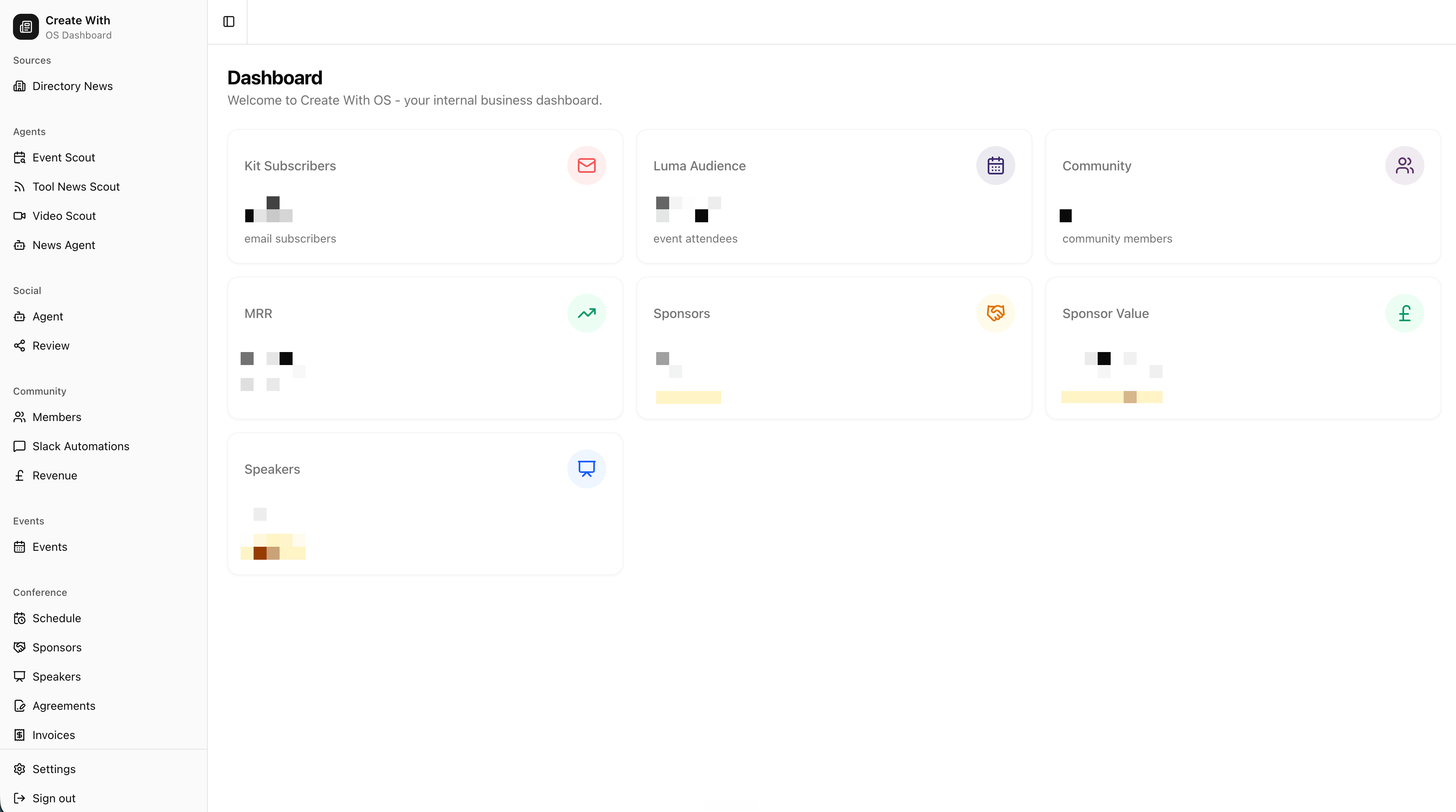
The heart of it all was what we ended up calling the Create With OS, a custom internal tool Kieran and I built using Claude and Codex, running on Vercel and Supabase. Basically the entire event lived in there: the schedule, speaker coordination, slides, budgeting. And because everything was in one place, the OS could feed everything else: the attendee app, the marketing emails, even the screens at the venue. If you’re curious about the attendee app side, I wrote about last year’s version of it here.
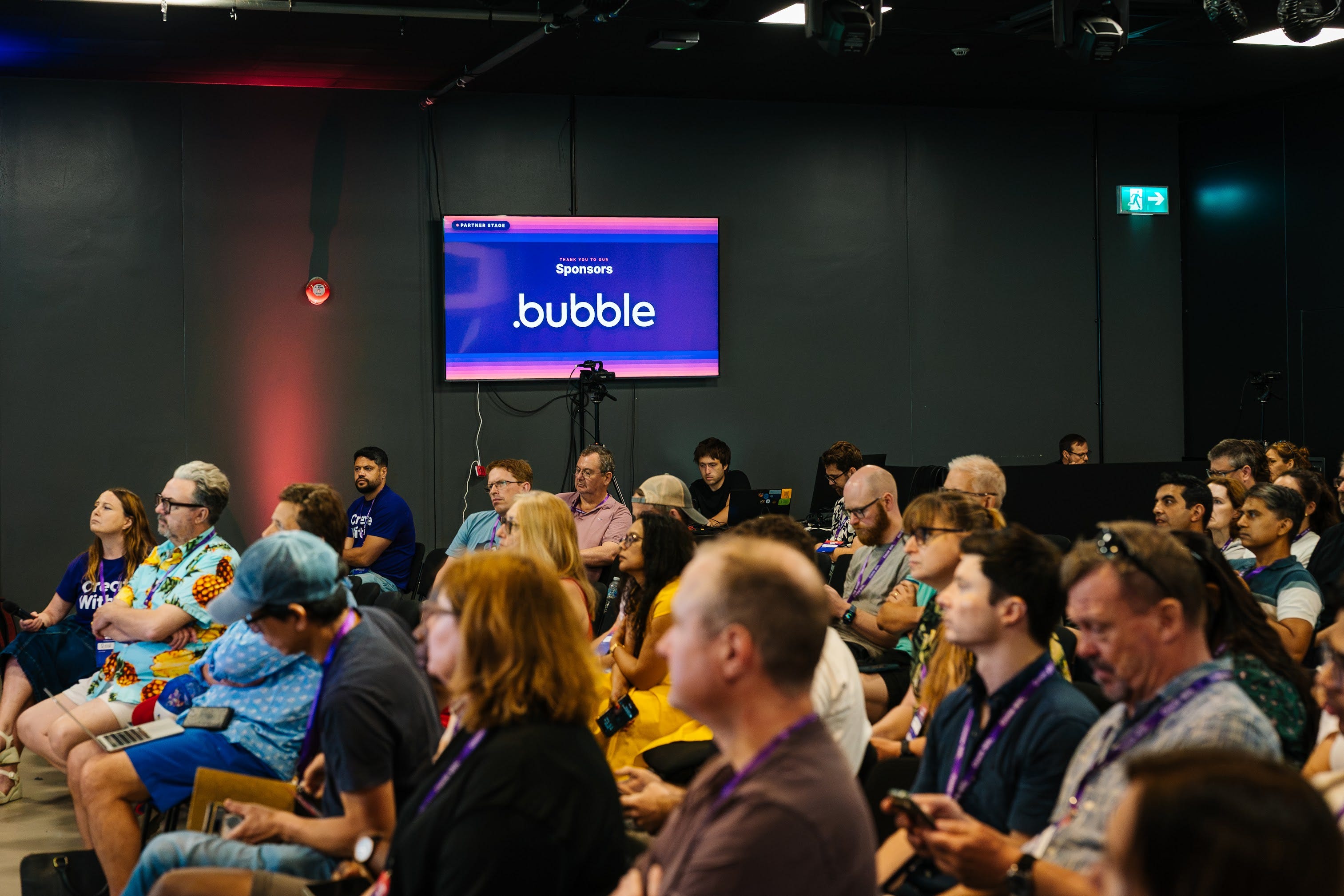
The screens might have been my favourite bit. We wrote custom software running on our own Raspberry Pis plugged into the venue’s TVs, pulling the live schedule straight from the OS and mixing in attendee photos throughout the day. See if you can spot the Pi dangling down from the TV in the photo below. Not our finest cable management moment!
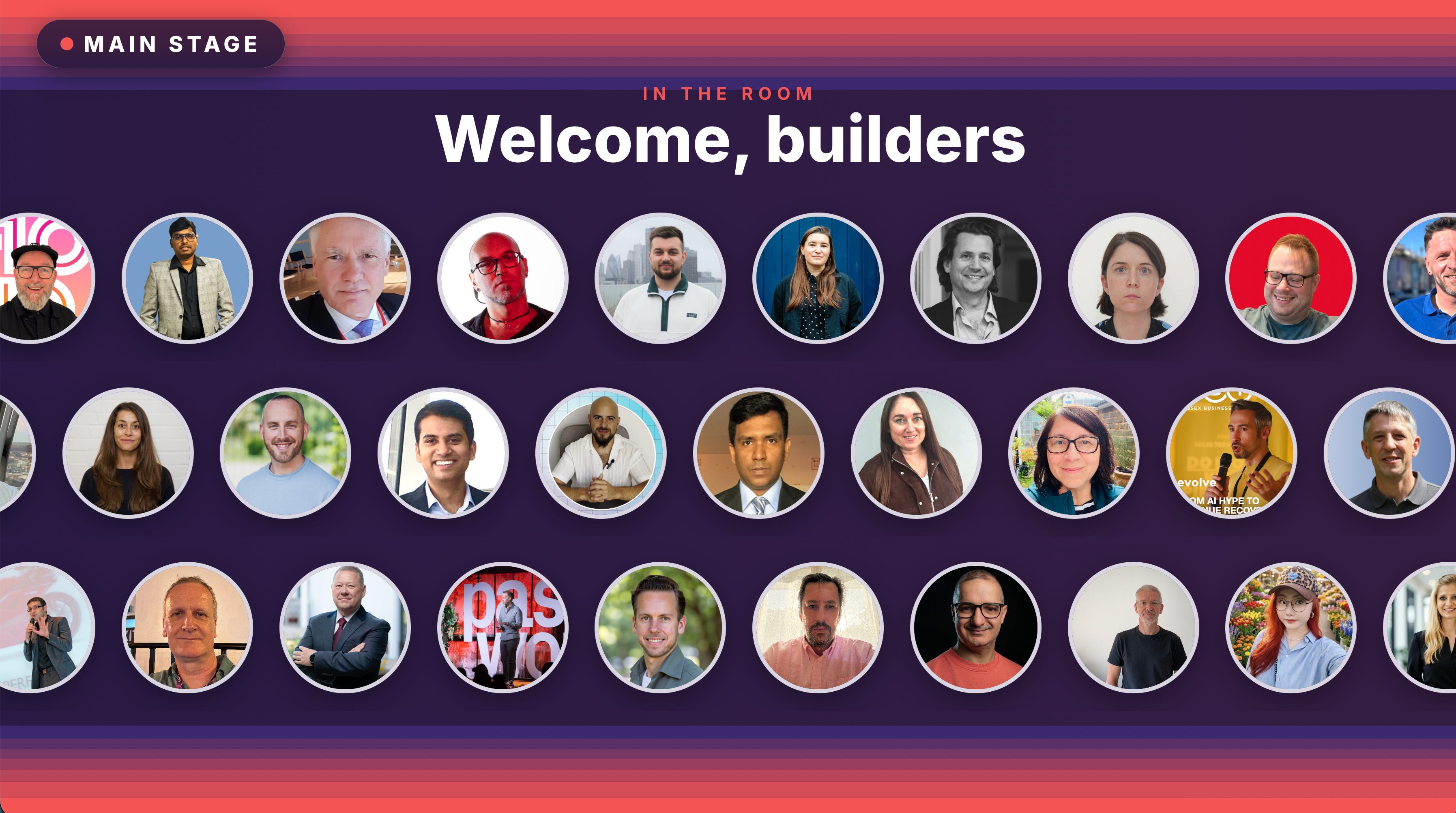
Here’s one of the screens, showing a live feed of attendees at the venue who were using our app. All their info and photos was synced to the OS via Supabase to keep everything up to date in real time.
Every marketing email we sent, 40 or so campaigns in all were generated by Claude, which pulled the latest schedule and speaker info from the OS and built updated templates each time.
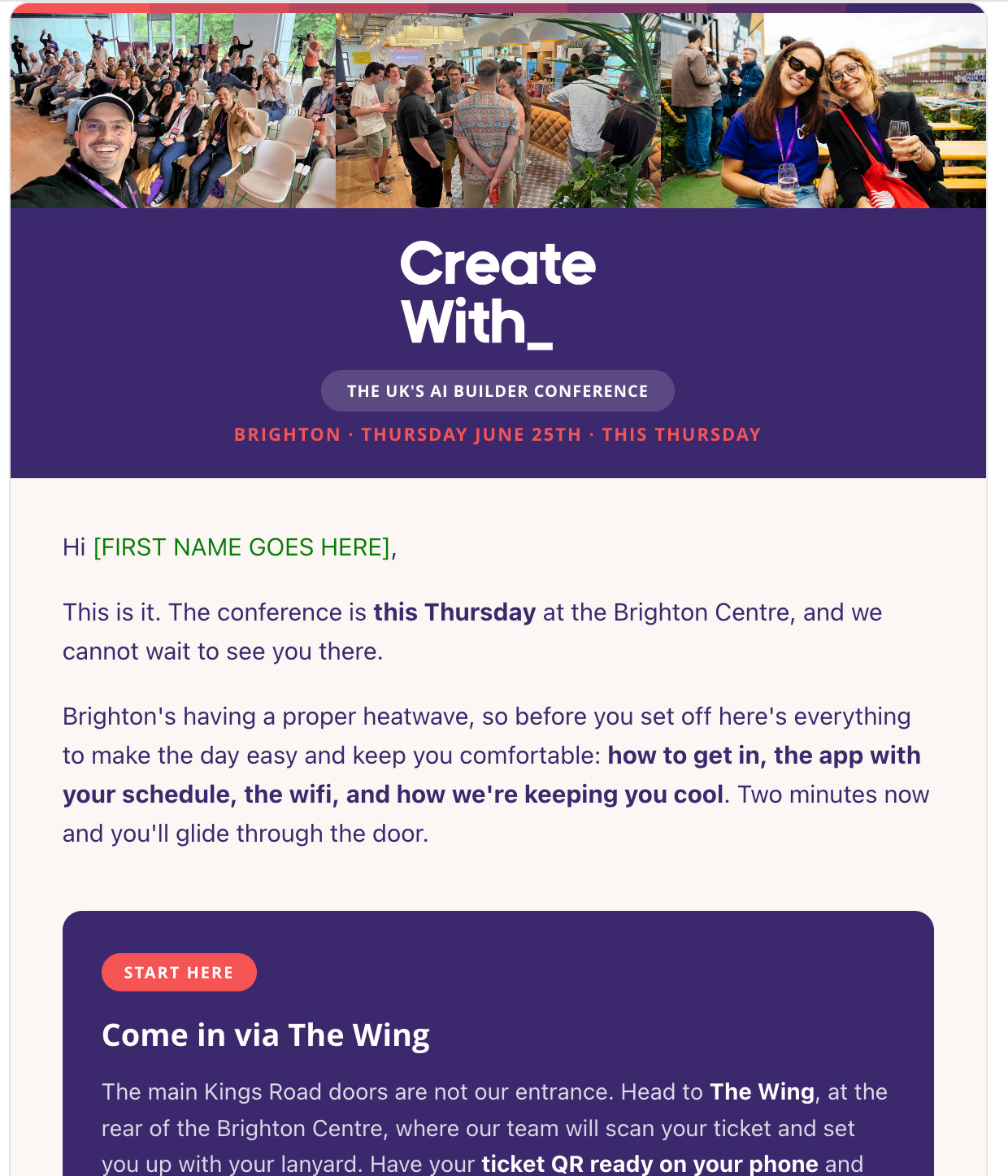
The interesting bit that made this work was having well organised folders of photos and assets that the email design agent could pick from.
Sorting out your files is now a marketing skill! It also relies a lot on the amazing imagery we’ve built up from previous conferences, almost all of it shot by the brilliant Beth Moseley.
All the automation in the world doesn’t help if the underlying photos aren’t great.
Coordinating with speakers, sponsors and partners is hundreds of email threads, and Codex’s Gmail plugin was a massive help here.
It drafted loads of emails for us, pulling live info from the OS in Supabase, so every message went out accurate and personal without either of us starting from a blank page.
For video we used Remotion in two ways. We batch generated videos for social media, including multiple versions for every speaker and talk, each with a different CTA.
Last year I did all of this manually, making the emails and editing the videos by hand, and it took me days. This year it was a batch job handled by Claude. We also built a hosted video generator on Vercel that live rendered custom videos for attendees and speakers, around 600 of them. People really loved sharing those!
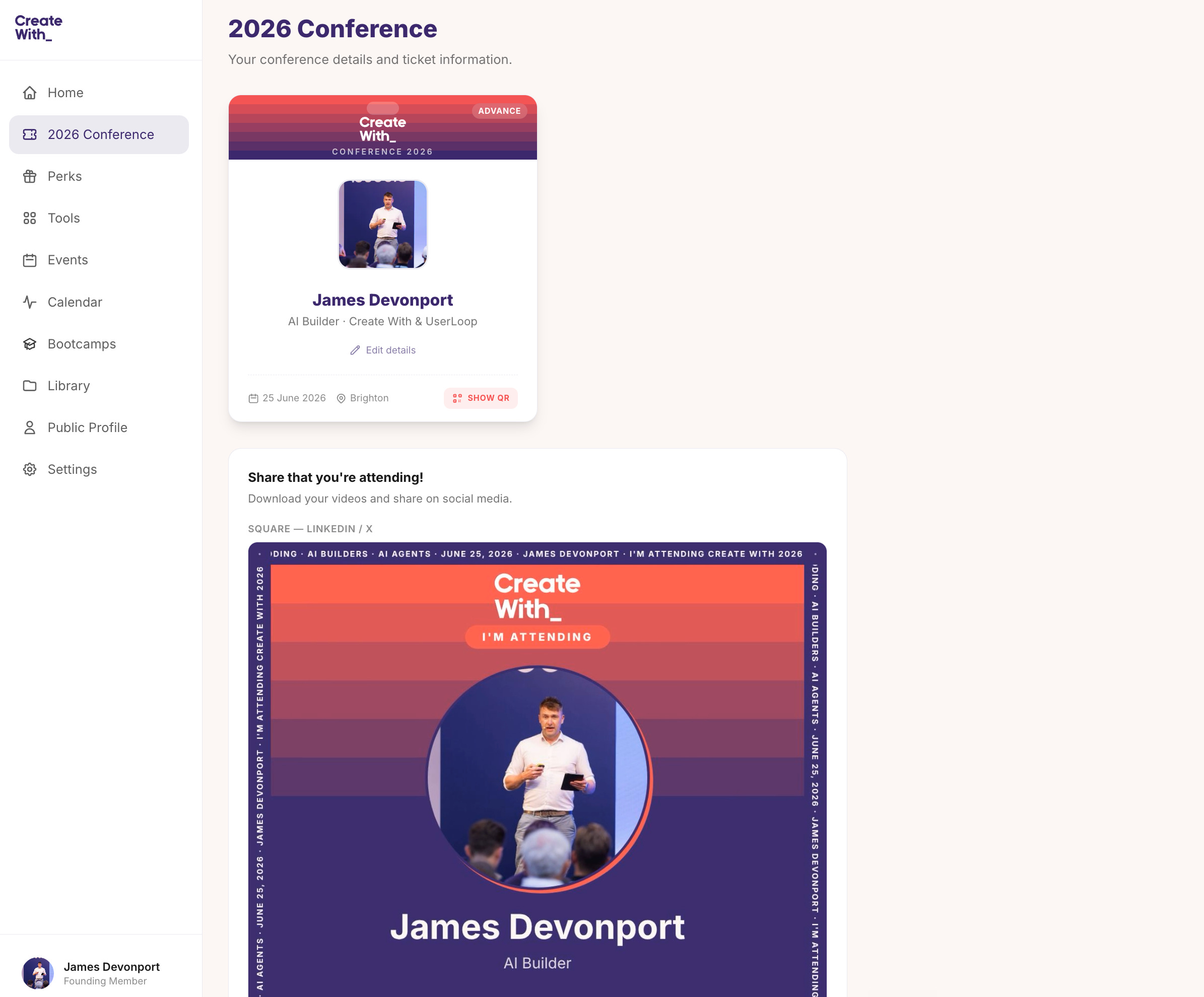
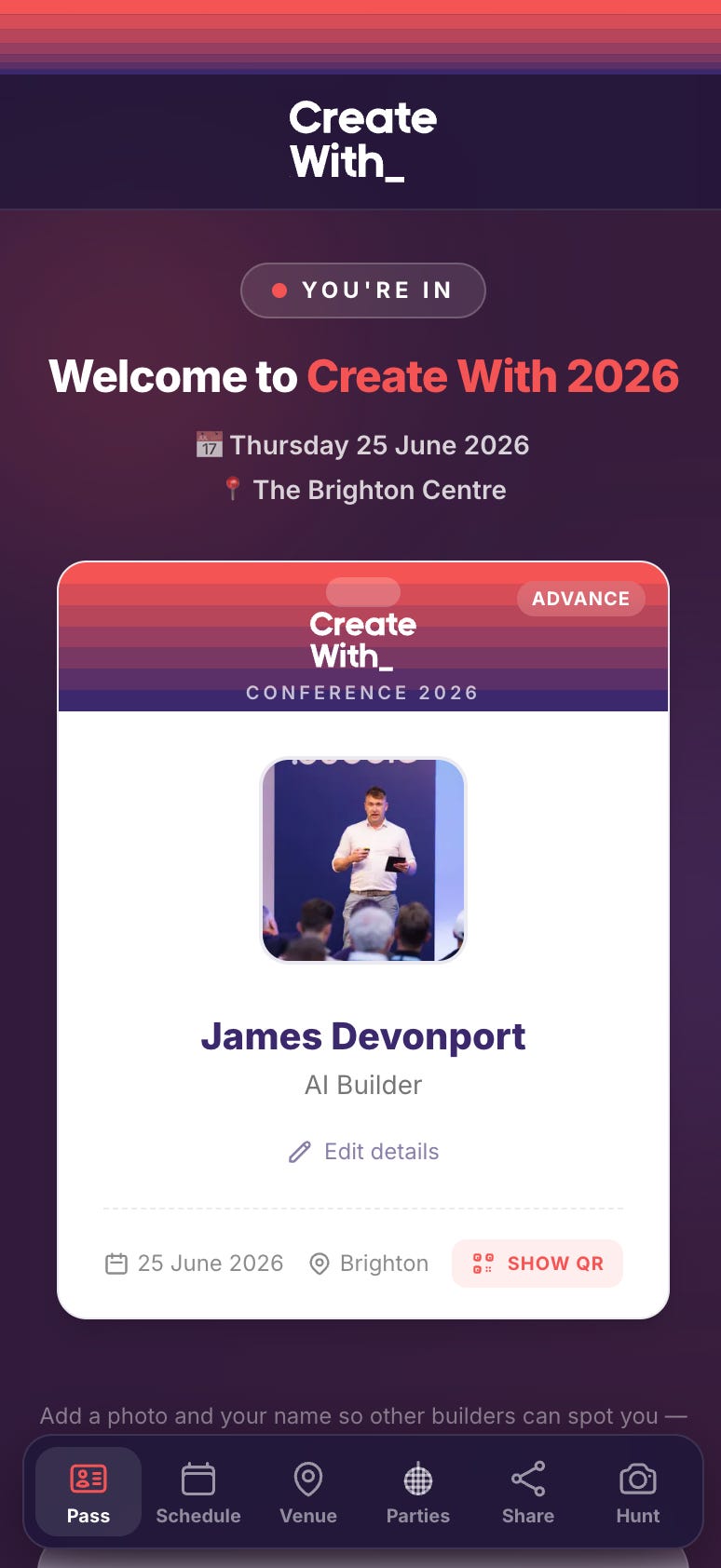
On social, posts about talks were generated and pre-scheduled as they happened, sharing the live stream link in real time. And on the paid side, AI built and managed all 200 or so of our Meta ads, which I covered properly in a previous issue if you want the full breakdown.
And obviously the conference website itself was built the same way, complete with its own event and news agents keeping it up to date.
I have to keep reminding myself, almost none of this was possible when we did last year’s conference, the pace of change with AI is really quite shocking.
Everyone’s shipping, no one’s getting noticed
These two charts from the FT’s John Burn-Murdoch caught my attention recently.
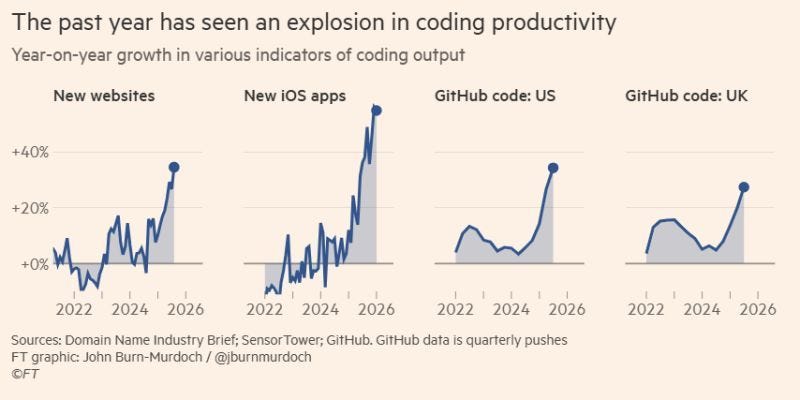
The first shows year-on-year growth in coding output exploding. New websites are up around 35%, new iOS apps up over 50%, and GitHub pushes in both the US and UK have shot up too. You can basically tell when Claude Opus and GPT 5.5 were released with the step change in capability. People are shipping more than ever.
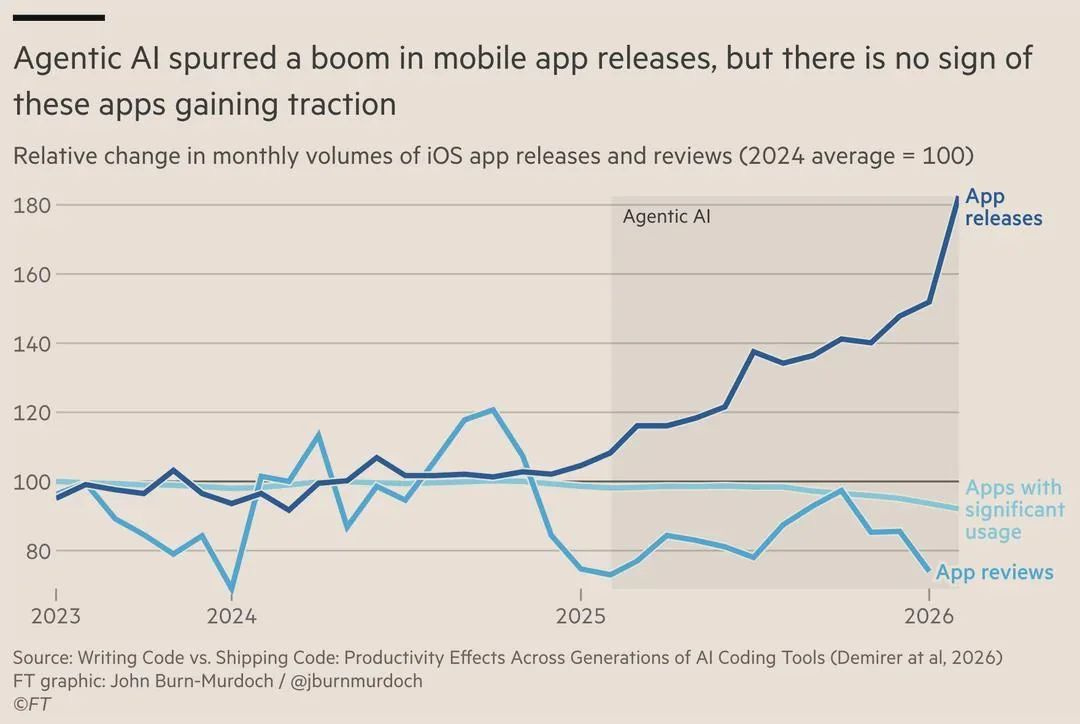
The second chart is the uncomfortable one. iOS app releases are now running at roughly 180% of their 2024 average, but app reviews have actually fallen over the same period, and the share of apps getting significant usage hasn’t budged at all.
As the FT headline puts it, agentic AI has spurred a boom in app releases, but there’s no sign of these apps gaining traction. The data behind it comes from a new study called Writing Code vs. Shipping Code, which is well worth a read if you’re a nerd like me. More stuff being made, the same amount of attention to go around.
I’m seeing exactly this play out with my own app, UserLoop, on Shopify’s App Store. More apps are being released on the Shopify App Store than ever before, mirroring what’s happening on the Apple App Store in that chart. Every category is getting more crowded, and standing out takes more work than it used to.
This is why I’ve been shifting more and more of my attention from building to automating marketing and go-to-market. And this is where the two halves of this issue meet. Running the conference showed me just how much of marketing can now be automated: the emails, the ads, the videos, the social posts. If building is no longer the bottleneck, distribution is. It’s really the next chapter of the solo founder story I wrote about at the start of the year, and I’m going to be focussing on this a lot more in future issues.
That’s it for this issue… it’s good to be back!
Happy building,
James
P.S. Whether you made it to Brighton or not, keep an eye out for the videos of all this year’s Create With talks, coming soon to YouTube 😁
Very interesting case study! Your original coding knowledge (it seems like) came in handy in being able to quickly adapt, adjust, and understand how different tools work together. I'd be very curious to learn more about the bts of the marketing side (email specifically) as well - but that's my area of nerdiness